

A Shared Responsibility: Understanding Nairobi’s Floods

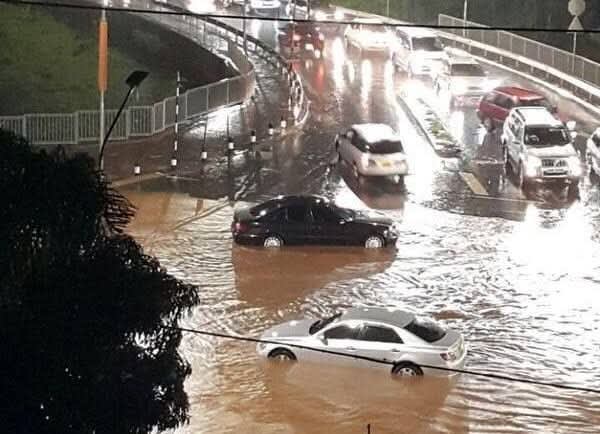
The recent flooding in our city has caused much distress, and naturally, people are looking for someone to hold accountable.
However, to truly solve the problem, we must look at the whole picture with honesty.
The Roots of the Problem The drainage issues we face today didn't appear overnight.
They are the result of structural and historical failures dating back to the 70s, 80s, and 90s.
For decades: Buildings were erected directly on top of sewage and drainage lines.
Natural water paths were diverted for private gain.
City planning didn't keep pace with our rapid growth.
Governor Sakaja inherited a system that was already compromised long before he took office.
Blaming the current administration for decades of systemic neglect doesn't clear the water; it only obscures the truth.
The Efforts on the Ground While the rains have been extraordinary—affecting regions as far as Migori—Nairobi is fighting back.
We must acknowledge the "Green Army"—the dedicated young men and women who have been working tirelessly in the trenches to clear debris and ensure that water flows as quickly as possible once the rain stops.
Their work is the reason the city drains as fast as it currently does.
The Difficult Question Ahead If we want a permanent solution, we have to face a hard reality.
An overhaul of the drainage system would require:
Demolishing structures built illegally on riparian land and sewage lines.
Reclaiming the natural flow of water that was diverted years ago.
If we demand that the Governor fixes the system once and for all, are we prepared for the sacrifice?
We cannot demand a dry city while simultaneously protecting the very structures that cause the blockage.
Let us stop the blame game and start a conversation about restoration.
We can support the current efforts to clean the city, or we can continue to protect the mistakes of the past. We cannot do both.
Kenn Okaka is a Communication and PR specialist